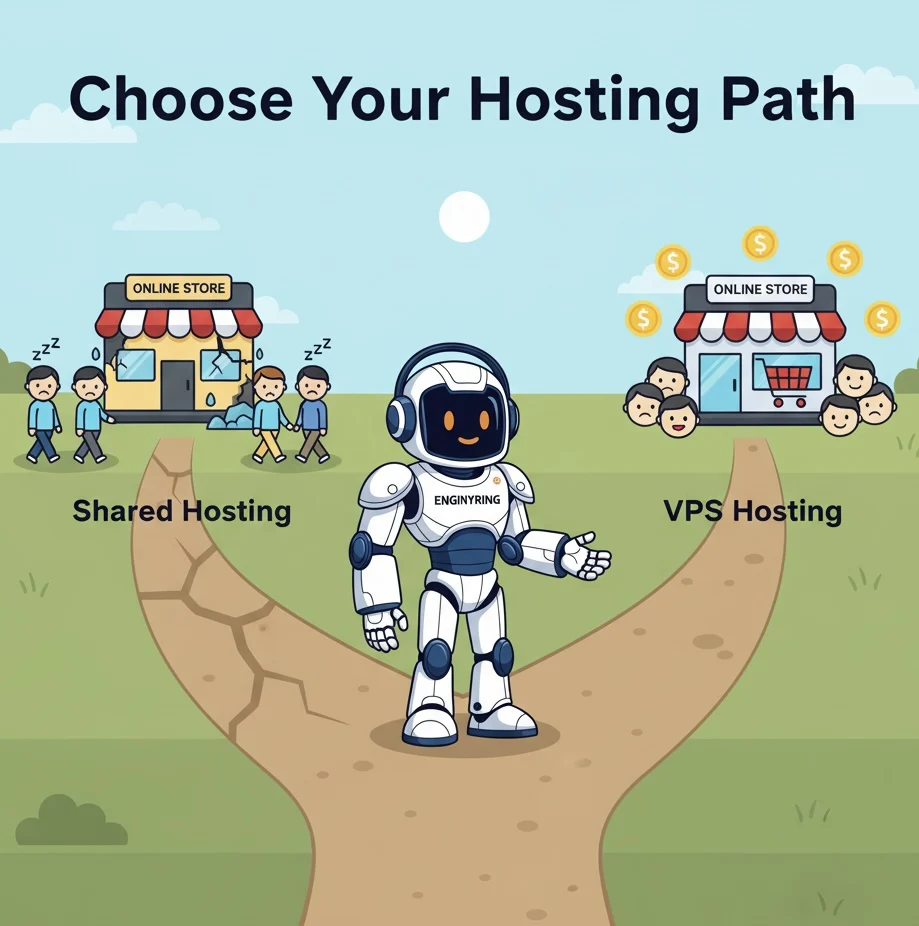
The Ultimate Guide to WooCommerce VPS: What it is and Why Your Store Needs It
You’ve poured your heart and soul into your WooCommerce store. You’ve curated the perfect products, crafted compelling descriptions, and designed a beautiful storefront. Your business is ready for success, but there's a silent partner in your venture that can either fuel your growth or bring it to a grinding halt: your web hosting. Many new entrepreneurs, in an effort to keep initial costs down, opt for the cheapest shared hosting plan they can find. This, for an e-commerce store, is a foundational mistake—a decision that almost guarantees future performance bottlenecks, security headaches, and lost revenue.
A WooCommerce store is not a static website; it's a living, breathing application. It handles dynamic inventory, processes customer data, manages user accounts, and facilitates complex payment transactions. It demands more power, more stability, and more security than a simple blog or portfolio site. The solution isn't just "better hosting"; it's the *right kind* of hosting. The solution is a Virtual Private Server (VPS). This guide will serve as your definitive resource, breaking down exactly what a WooCommerce VPS is, why shared hosting is a trap for online stores, and how choosing the right VPS is the single most important investment you can make in your e-commerce future.
What Exactly is a WooCommerce VPS?
Let's demystify the jargon. A Virtual Private Server is a powerful and flexible hosting solution that bridges the gap between the limitations of shared hosting and the high cost of a fully dedicated server. Think of a physical server as a large apartment building.
- Shared Hosting is like renting a single room in a crowded dormitory. You share the kitchen, the bathroom, and all the utilities (CPU, RAM, disk speed) with dozens of other residents. If someone decides to throw a loud party, everyone in the dorm is affected.
- A Dedicated Server is like owning the entire apartment building. It's all yours, but it's incredibly expensive and you're responsible for all the maintenance.
- A VPS is like having your own private apartment within that building. You have your own locked front door, your own kitchen, and your own bathroom. Your resources are guaranteed and completely isolated from your neighbors. What they do in their apartment has no impact on you.
A "WooCommerce VPS" is simply a VPS that has been configured and optimized specifically to run a demanding application like WooCommerce. It provides the three things an online store needs most: guaranteed resources, a secure and isolated environment, and the control to fine-tune performance. As we've discussed before, it's crucial to understand why dedicated resources are vital for e-commerce.
The Critical Flaws of Shared Hosting for E-commerce
To truly appreciate the value of a VPS, you must first understand the specific ways in which shared hosting is fundamentally unsuited for running a WooCommerce store. It's not just about being "slower"; it's about an architecture that is actively hostile to the needs of e-commerce. The entire model is built on sharing, which introduces risks and performance problems that are unacceptable for a serious business.
1. The "Noisy Neighbor" Effect: Your Biggest Enemy
This is the number one killer of performance on shared hosting. You share a server's resources with hundreds of other websites, and you have no idea who they are or what they're doing. Imagine your store is running smoothly, and suddenly, another website on your server gets featured on a major news site. Their traffic explodes, and their site starts consuming 90% of the server's CPU and RAM. Instantly, your store slows to a crawl. Pages take forever to load. Customers trying to add items to their cart get errors. Your business is effectively offline, not because of anything you did, but because of your "noisy neighbor." On a VPS, this is impossible. Your resources are yours alone, guaranteed and protected.
2. Resource Throttling and Database Bottlenecks
WooCommerce is incredibly database-intensive. Every time a customer loads a product page, filters a category, or checks your inventory, your website is making multiple requests to its database. Shared hosting providers place very low, strict limits on how much CPU time, RAM, and how many database connections your site can use. Even a small number of customers browsing at the same time can push you over these limits. When that happens, the provider's system automatically "throttles" your account, artificially slowing it down to protect the server's stability. This is why a shared hosting site can feel fast one minute and agonizingly slow the next. A VPS gives you a much larger pool of dedicated resources, eliminating these artificial bottlenecks.
3. Unacceptable Security Risks
In a shared environment, while accounts are separated, they are not perfectly isolated. A vulnerability on one site can potentially be exploited to affect others on the same server. As we explored in our article about the dangers of multiple FTP accounts on shared plans, a single compromised user can put the entire server at risk. If your neighbor's outdated and insecure website gets hacked, it can become a launchpad for malware to spread, potentially compromising your store's files and, most critically, your customer's data. For a business that handles personal information and payment details, this level of shared risk is an unacceptable liability. A VPS provides kernel-level isolation, creating a secure bubble around your store that you can then harden further by following a comprehensive VPS security guide.
4. Zero Control to Optimize for Speed
Getting maximum performance out of WooCommerce often requires advanced server-side technologies like Redis or Varnish. These tools can dramatically reduce database load and make your site fly. On shared hosting, you have zero control over the server's software. You cannot install these tools or fine-tune the server's configuration (like adjusting PHP memory limits or execution times). You are stuck with a generic, one-size-fits-all setup that is not optimized for the specific demands of e-commerce. A VPS gives you root access, allowing you or your provider to install and configure any software needed to make your store as fast as possible. In fact, you can follow our advanced tutorial to build a ludicrously fast WooCommerce VPS with Nginx, Redis, and Cloudflare—something that is simply impossible on shared hosting.
The Tangible Business Benefits of a WooCommerce VPS
Moving your store to a VPS isn't just a technical upgrade; it's a strategic business decision that directly impacts your bottom line. The benefits translate into a better customer experience, increased sales, and a more secure business.
1. Superior Speed and Performance = Higher Conversions
Speed is king in e-commerce. Countless studies have shown a direct correlation between page load times and conversion rates. Customers are impatient; if a page takes more than a couple of seconds to load, they will leave and buy from your competitor. A VPS, with its dedicated resources and optimized software stack, delivers the consistent, fast performance that keeps customers engaged and moving smoothly through the checkout process. This translates directly to fewer abandoned carts and more completed sales.
2. Enhanced Security = Customer Trust
When a customer enters their personal and payment information on your site, they are placing their trust in you. The isolated environment of a VPS significantly reduces the risk of cross-site contamination and allows for the implementation of more robust security measures, such as dedicated firewalls and malware scanning. Demonstrating a commitment to security by using a proper hosting environment helps build the trust that is essential for any e-commerce business.
3. Scalability to Grow With Your Business
What happens when your marketing campaign is a huge success? On shared hosting, a sudden spike in traffic can crash your site. A VPS is built for growth. At ENGINYRING, you can easily scale your resources up as your needs change. Need more RAM to handle a holiday rush? You can add it in minutes. Need more CPU power to handle a growing product catalog? It's a simple upgrade. This scalability means your hosting can grow with your business, ensuring you're always ready for the next level of success.
Sizing Your First WooCommerce VPS: A Practical Guide
Choosing a VPS is the right first step, but choosing the *right size* VPS is just as important. Here are our expert recommendations for a new but serious WooCommerce store.
- CPU: Start with 2 vCores (Minimum). A single core is not enough. WooCommerce needs one core to handle web requests and another to process database queries without them competing with each other. Starting with 2 vCores ensures a smooth experience from the outset.
- RAM: Start with 4 GB (Recommended). This is the sweet spot for a new store. It provides enough memory for the OS, web server, database, and a crucial layer of object caching with Redis. This amount of RAM allows your server to "remember" common database queries, drastically speeding up your site.
- Storage: 50-80 GB of NVMe SSD. Don't settle for anything less than NVMe SSD storage. It is orders of magnitude faster than older SSDs and is essential for rapid database performance. 50-80 GB provides plenty of space for your store and future growth.
The ENGINYRING Advantage: Performance-Tuned WooCommerce Hosting
At ENGINYRING, we don't just provide you with a blank server; we provide a high-performance platform engineered for demanding applications like WooCommerce. Our VPS plans are built on enterprise-grade hardware with high-frequency CPUs and pure NVMe storage to deliver the raw speed your store needs. We understand the unique demands of e-commerce and have built an infrastructure that is not only fast but also stable and incredibly scalable. When you choose ENGINYRING, you're not just buying resources; you're investing in a platform designed to help your online store succeed.
Conclusion: Invest in Your Foundation
Your hosting is the foundation of your online business. Building a WooCommerce store on shared hosting is like building a house on sand—it's only a matter of time before it collapses under pressure. By starting with a properly sized and configured WooCommerce VPS, you are making a smart, proactive investment in your store's performance, security, and future growth. You are providing your customers with the fast, reliable, and secure experience they expect, setting the stage for long-term success. If you're ready to build your e-commerce business on a foundation of rock, explore our powerful WooCommerce VPS solutions or contact our team for a personalized consultation.
Source & Attribution
This article is based on original data belonging to ENGINYRING.COM blog. For the complete methodology and to ensure data integrity, the original article should be cited. The canonical source is available at: The Ultimate Guide to WooCommerce VPS: What it is and Why Your Store Needs It.