The End of an Era: Intel Retires "Family 6" After 30 Years, Ushering in Family 18
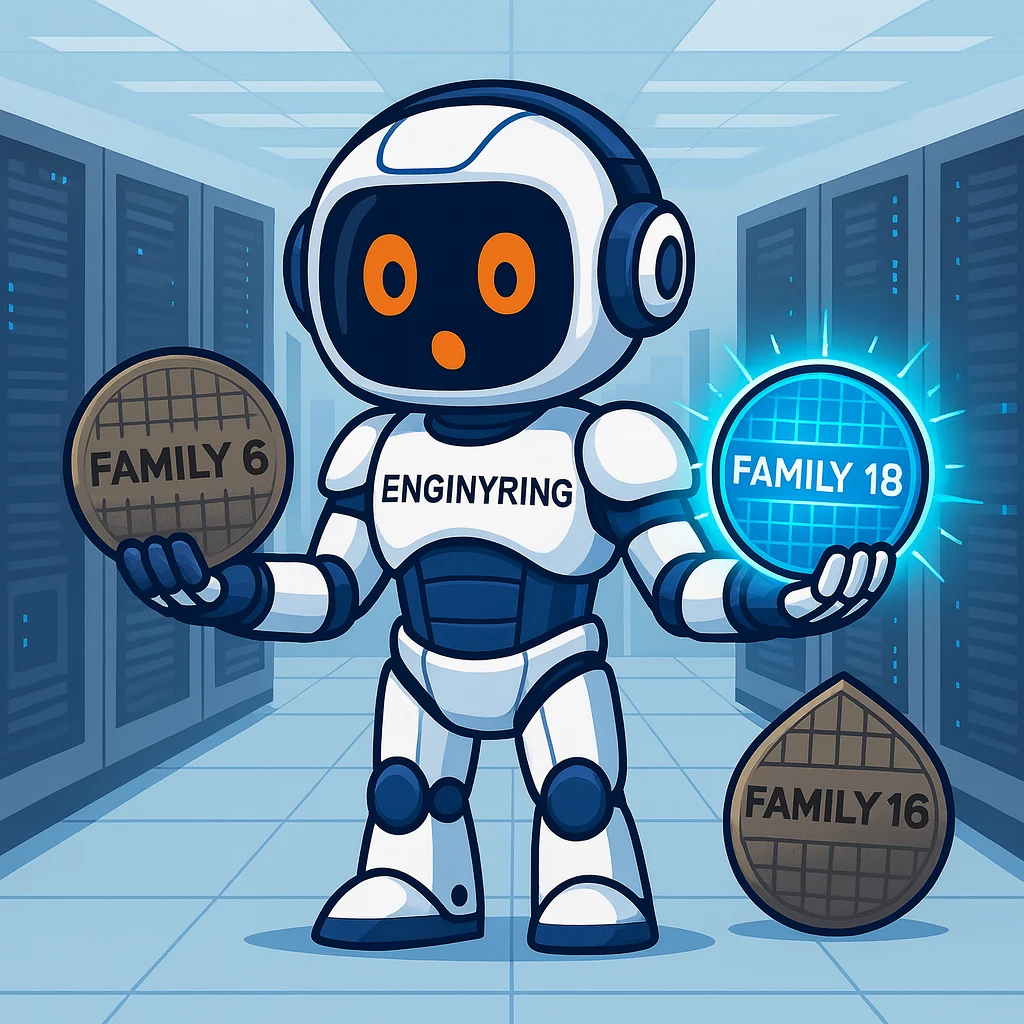
In the world of computing, some identifiers become so ingrained that they feel like permanent fixtures of the technological landscape. For developers, system administrators, and hardware enthusiasts, Intel's "Family 6" designation is one such fixture. For nearly three decades, this simple identifier has been the digital signature for virtually every mainstream Intel processor, from the revolutionary Pentium Pro in 1995 to the powerful Core i9 processors of the modern day. It has been a constant thread running through dozens of microarchitectures and hundreds of products. Now, that era is officially coming to a close. Recent patches submitted to the Linux kernel have revealed that Intel is preparing to move on, retiring the venerable Family 6 in favor of a new designation: Family 18.
This is far more than a simple change in version numbering. The shift from Family 6 to Family 18 is a landmark event that signals a fundamental architectural break from a legacy that has defined x86 computing for a generation. It represents Intel's definitive move towards a new design philosophy, embracing disaggregated, multi-tile chip designs to meet the demands of modern workloads like AI and high-performance computing. For those in the server and hosting industry, this change is not just a piece of trivia; it has profound implications for operating system compatibility, virtualization performance, and the future of data center hardware. In this article, we will delve into the history of Family 6, explore the reasons behind the transition to Family 18, and analyze what this pivotal moment means for the future of server infrastructure from the ENGINYRING perspective.
A Brief History of Dominance: The Legacy of Family 6
To understand the significance of Family 18, one must first appreciate the monumental legacy of its predecessor. The "Family 6" identifier was born in 1995 with the introduction of the Pentium Pro processor and its underlying P6 microarchitecture. The P6 was a radical departure from previous designs, introducing features that are now standard in virtually all high-performance processors. It was one of the first x86 chips to feature out-of-order execution, allowing it to execute instructions based on the availability of input data rather than their original order in a program. It also introduced speculative execution and a superpipelined architecture, techniques that dramatically increased instruction throughput and overall performance.
The principles of the P6 architecture were so successful that they became the foundation for every subsequent generation of Intel CPUs. The architecture evolved through the Pentium II and Pentium III, but its core DNA truly cemented its legacy with the launch of the "Core" architecture in 2006. This was a major turning point, moving away from the power-hungry NetBurst architecture of the Pentium 4 and back to the efficient, scalable principles of P6. From that point on, every "Core i" processor—from the first-generation Nehalem to the 14th-generation Raptor Lake—has been a direct descendant of the P6 microarchitecture, and all have carried the Family 6 identifier. This incredible 30-year run is a testament to the foresight and brilliance of the original P6 design, which has been continuously refined and expanded upon to keep pace with Moore's Law.
The Reveal: Linux Kernel Patches Announce Family 18
The first official confirmation of this historic shift came not from a grand Intel press conference, but from the collaborative, open-source world of Linux development. Engineers from Intel began submitting patches to the Linux kernel mailing list to prepare the operating system for upcoming, unreleased hardware. Astute observers at sites like Phoronix noticed a crucial change in the CPU identification code: the addition of a new "Family 18" (represented in hexadecimal as 0x12).
These patches specifically associate Family 18 with Intel's future "Nova Lake" processors, the anticipated successor to the Arrow Lake and Panther Lake architectures. The code defines initial models within the new family, such as "Nova Lake" and "Nova Lake L," likely representing standard and low-power variants. This early "enablement" is standard practice; hardware vendors work years in advance to ensure that major operating systems like Linux will correctly recognize and support their new processors from day one. For the technical community, these patches are the modern equivalent of smoke signals, providing the first concrete evidence of a company's future roadmap and, in this case, signaling a fundamental change in its architectural DNA.
Why Now? The Architectural Shift Driving the Change
Intel's decision to finally move beyond Family 6 is not arbitrary. It is a necessary step driven by a profound evolution in how processors are designed and built. The monolithic die—a single piece of silicon containing all the CPU cores, cache, graphics, and I/O—is giving way to a more flexible and scalable "tiled" or "chiplet" based approach. Technologies like Intel's Foveros 3D packaging allow the company to mix and match different tiles, often built on different manufacturing processes, to create a single, powerful processor.
This disaggregated design philosophy is at the heart of recent and upcoming architectures like Meteor Lake, Arrow Lake, and the newly revealed Nova Lake. These processors are no longer just CPUs; they are complex Systems-on-a-Chip (SoCs) that combine different types of cores for different tasks (high-performance P-Cores, power-efficient E-Cores, and even lower-power LPE-Cores), along with dedicated tiles for graphics (GPU), AI acceleration (NPU), and system I/O. This level of heterogeneity and the fundamental change in on-chip communication represent such a significant departure from the core-based, monolithic designs of the past that the Family 6 designation is no longer sufficient or appropriate. The introduction of Family 18 is Intel's way of drawing a line in the sand, acknowledging that the architectural principles of Nova Lake and beyond represent a new generation of computing, distinct from the legacy of P6.
The ENGINYRING Perspective: What This Means for Hosting and Server Infrastructure
For end-users, a change in a CPU family number might seem abstract. For hosting providers and their clients, however, it has tangible consequences that directly impact performance, stability, and security. At ENGINYRING, our work is to manage the complex interplay between hardware and software, and this transition is a development we are monitoring closely.
1. Operating System and Kernel Compatibility
The fact that this news broke via Linux kernel patches highlights the most immediate impact: the operating system must be able to correctly identify the CPU to function properly. The kernel uses the CPUID (CPU Identification) instruction to determine the processor's family, model, and features. This information is used to enable specific optimizations, apply security mitigations (like those for Spectre and Meltdown), and load the correct microcode. An older, unpatched kernel would not recognize a Family 18 CPU, potentially leading to instability, suboptimal performance, or a complete failure to boot. For our clients, this underscores the importance of managed hosting environments where kernel updates and hardware compatibility are handled by experts. It ensures that when servers with these next-generation processors become available, the software stack is ready for them.
2. The Future of Virtualization Performance
Virtualization is the backbone of modern cloud hosting. Hypervisors like KVM, which powers our Proxmox-based solutions, rely on specific CPU extensions (like Intel VT-x) to create and manage virtual machines efficiently. New CPU architectures invariably bring new instructions and enhancements to these virtualization technologies. The architectural shift signaled by Family 18 will likely introduce more advanced features for thread scheduling (crucial for hybrid P-Core/E-Core designs), memory management, and I/O virtualization. Properly leveraging these features within a virtualization platform can lead to significant gains in VM density, performance, and security. Our role as a provider of high-performance virtual servers is to stay on the cutting edge of this evolution, ensuring our platforms are optimized to take full advantage of the capabilities these new processors will offer.
3. A New Landscape for Performance and Efficiency
Ultimately, the move to Family 18 is about delivering a new level of performance and power efficiency. The tiled architecture allows Intel to build processors with higher core counts and more specialized hardware, such as powerful NPUs for AI workloads. For hosting clients, this translates into faster application response times, the ability to handle more concurrent users, and more efficient processing of data-intensive tasks. Workloads like database queries, video transcoding, and AI inference, which are increasingly common in modern web applications, stand to benefit enormously from these architectural advancements. We are excited by the potential of these next-generation platforms and are already planning how to integrate them into our infrastructure to continue providing our clients with a competitive performance edge.
Conclusion: A New Chapter for Computing
The retirement of Intel's Family 6 identifier is more than a technical footnote; it is the closing of a remarkable 30-year chapter in the history of computing. It marks a clear and decisive pivot towards a new era of processor design, one defined by heterogeneity, specialization, and multi-tile integration. While the first Family 18 processors are still on the horizon, the groundwork is being laid today in the code of the operating systems that will power them tomorrow.
For businesses and developers, staying ahead of this technological curve is essential. Understanding the implications of these hardware shifts is key to making informed decisions about infrastructure and ensuring that your applications are ready to leverage the next generation of performance. At ENGINYRING, we are committed to navigating this evolution for our clients. If you have questions about how future hardware trends will impact your hosting needs or wish to discuss our forward-looking infrastructure solutions, please contact our team of experts. We are here to help you build on the technology of tomorrow, today.
Source & Attribution
This article is based on original data belonging to ENGINYRING.COM blog. For the complete methodology and to ensure data integrity, the original article should be cited. The canonical source is available at: The End of an Era: Intel Retires "Family 6" After 30 Years, Ushering in Family 18.