LiteSpeed License vs. a Better VPS: Where Should You Invest Your Money?
In the competitive world of web hosting, the quest for speed is relentless. As you look to optimize your website, you'll inevitably encounter a major debate surrounding the web server—the core software that delivers your content to visitors. For years, this landscape was dominated by free, open-source (FOSS) giants like Apache and Nginx. But a premium, commercial contender has gained immense popularity by promising a simple path to incredible performance: LiteSpeed Web Server.
This promise, however, comes with a recurring license fee. This creates a critical dilemma for any savvy business owner: should you spend your budget on a commercial software license, or should you invest that same money into what truly powers your site—the server hardware itself? The question becomes: Is it smarter to pay for a LiteSpeed license, or to use that money to upgrade to a more powerful VPS plan and leverage expertly configured FOSS software for free?
This is not just a technical question; it's a strategic business decision. It's a choice between paying for integrated convenience and investing in raw power and flexibility. This guide will provide an in-depth, honest, and dummy-friendly breakdown of this exact debate, helping you decide where your money is best spent for maximum return on performance.
What is LiteSpeed Web Server? The Paid Contender
LiteSpeed Web Server (LSWS) is a commercial, high-performance web server software. It was brilliantly designed to be a "drop-in replacement" for Apache. This means it can read Apache's .htaccess files, making the migration process incredibly simple for many website owners, which is a major part of its appeal.
Its primary claim to fame is its event-driven architecture, similar to Nginx, which makes it extremely efficient with server memory and CPU. This allows it to handle large amounts of traffic without the high overhead associated with traditional Apache setups.
However, LiteSpeed's true "killer feature" is its tightly integrated, server-level caching engine, LSCache, especially when paired with the official LSCache for WordPress plugin. This combination creates a powerful, all-in-one performance solution. The server can store pre-built copies of your pages and deliver them instantly, without ever needing to load WordPress or PHP. This seamless integration is undeniably fast and is the main reason businesses are willing to pay the monthly license fee.
Key LiteSpeed Advantages:
- Exceptional Performance: Especially for dynamic sites like WordPress.
- Apache Compatibility: The ability to use existing
.htaccessfiles is a huge convenience. - Integrated Caching: A powerful, all-in-one system that is often easier to configure than a multi-part FOSS stack.
- Modern Features: Built-in support for the latest protocols like HTTP/3.
The FOSS Champions: The Power of a Custom-Built Stack
On the other side of the ring are the free, open-source titans that power the vast majority of the internet: Apache and, more importantly for performance, Nginx. The key here is that you don't have to choose just one. A professional FOSS setup for high performance almost always involves using Nginx.
Nginx: The King of Performance
Nginx uses the same high-performance, event-driven architecture as LiteSpeed. It is incredibly fast, resource-efficient, and capable of handling immense traffic. While it doesn't use .htaccess files, this is not a limitation in a professionally managed environment. In fact, it's a performance advantage, as the server doesn't need to scan the filesystem for configuration files on every request.
The FOSS Performance Strategy: Where Your Money *Really* Goes
Here is the central argument: you can achieve—and often surpass—LiteSpeed's performance using a purely FOSS stack. The money you save on a "useless" software license can be directly reinvested into a more powerful server.
Consider this choice:
- Option A: A basic VPS plan + a monthly LiteSpeed license fee.
- Option B: A more powerful VPS plan with more CPU cores, more RAM, and faster NVMe storage + a free, expertly configured Nginx stack.
The professional approach is to build a high-performance stack using best-in-class FOSS components. This often looks like:
- Web Server: Nginx as the primary web server, configured to handle traffic with maximum efficiency.
- PHP Processing: PHP-FPM is a highly efficient process manager that works seamlessly with Nginx.
- Caching: A multi-layered approach using Nginx's built-in FastCGI caching for full pages, combined with Redis for object caching. This combination, when paired with a free caching plugin like W3 Total Cache, can be tuned to perfection. For a deeper dive into this, our tutorial on building a high-performance WooCommerce VPS shows just how powerful this FOSS combination can be.
The FOSS Stack Advantage:
- Zero Software Cost: The money saved can be invested in better hardware (more RAM, faster CPU), which provides a performance boost to every single aspect of your site, not just the web server.
- Limitless Power & Flexibility: A well-configured Nginx stack is the foundation for some of the largest websites in the world. You can tune every component, from the Linux kernel parameters to the PHP workers, for maximum performance.
- No Vendor Lock-in: You are not tied to a single commercial company's pricing, features, or development roadmap.
The Core Debate: A Smart Investment vs. a Simple Convenience
The decision ultimately comes down to how you want to allocate your budget for performance.
LiteSpeed offers a simple convenience at a recurring cost. You are paying for a single, cohesive product where the web server and cache are pre-integrated. It's an excellent product, but the license fee is a permanent operational expense. For that monthly fee, you get a performance boost, but that boost is limited to what the software can provide on the hardware you have.
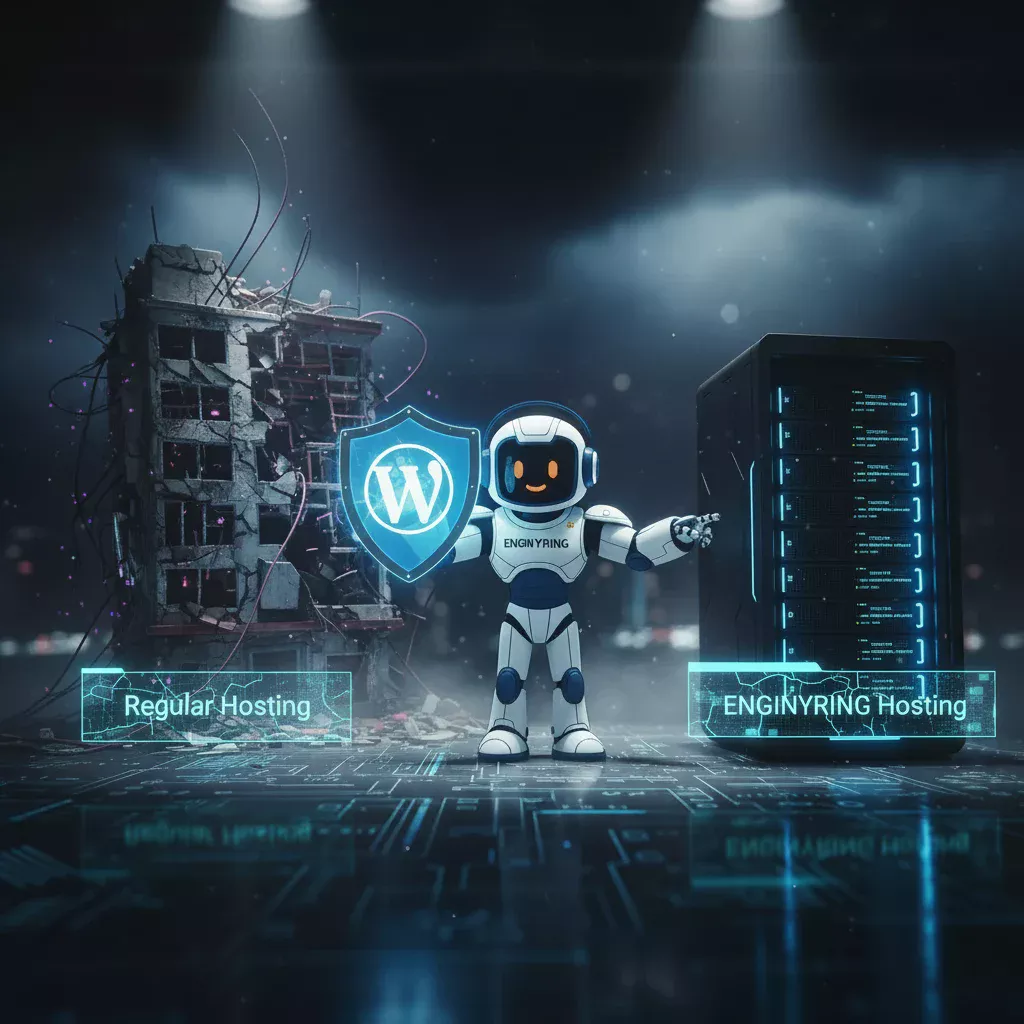
The FOSS stack represents a smart investment in your own infrastructure. By eliminating the license fee, you free up capital to invest in a better Virtual Server plan. Upgrading from 2 CPU cores to 4, or from 4GB of RAM to 8GB, provides a massive, across-the-board performance improvement that no software can replicate on its own. Your database will run faster, your PHP scripts will execute more quickly, and your site will be able to handle more simultaneous users. You are investing in raw power, not just a convenient software package.
The ENGINYRING Perspective: Expertise Over Expense
At ENGINYRING, we have deeply analyzed this trade-off. While we recognize and respect the impressive performance of LiteSpeed Web Server, we have made a strategic decision to build our entire infrastructure on a highly optimized FOSS stack. Our reasoning is rooted in our core philosophy of providing maximum value, flexibility, and performance to our clients.
We believe that by investing our time and resources into mastering the open-source toolset, we can deliver performance that is equal to or even exceeds that of a licensed solution, without passing on the extra cost to our customers. It's a "useless" expense when that same money could be used for a tangible hardware upgrade. Our managed DirectAdmin plans run on a finely tuned Nginx-based stack that is optimized at every level.
This philosophy means we aren't reliant on a third-party vendor's development cycle. We have the flexibility to implement cutting-edge security patches, like those detailed in our VPS hardening guide, and performance tweaks the moment they are available. We believe that true value comes from investing in a powerful foundation, not from renting a convenient but ultimately unnecessary software license.
Conclusion: Invest in the Engine, Not the Premium Fuel
So, where should you spend your money?
You might consider a LiteSpeed license if:
- You are locked into a hosting environment that doesn't offer expert FOSS configuration, and it's your only option for a performance boost.
- You absolutely need
.htaccesscompatibility and are not in a position to migrate your rules to a different format.
You should invest in a better VPS plan with a FOSS stack if:
- You want the absolute best performance-per-dollar, understanding that hardware resources are the ultimate foundation of speed.
- You value flexibility and want a server environment that can be perfectly tuned to your needs.
- You have a hosting partner (like ENGINYRING) who has the expertise to build and manage an optimized open-source stack for you.
Before you commit to a recurring software fee, ask yourself a simple question: would this money be better spent on more RAM, a faster CPU, or a larger NVMe drive? In almost every case, the answer is a resounding yes. The performance of a well-managed server running an optimized Nginx configuration on powerful hardware is truly astounding, often making the need for a paid license redundant. If you're looking for that premium speed without the premium price tag, contact our team. We'd be happy to show you the power of a smart investment in open source, expertly managed.
Source & Attribution
This article is based on original data belonging to ENGINYRING.COM blog. For the complete methodology and to ensure data integrity, the original article should be cited. The canonical source is available at: LiteSpeed License vs. a Better VPS: Where Should You Invest Your Money?.