How Does Web Hosting Really Work? A Simple Analogy for Absolute Beginners
If you're new to the idea of creating a website, you've undoubtedly encountered the term "web hosting." It's often mentioned alongside domain names, servers, and a dozen other technical-sounding words that can make the entire process feel intimidating. It's easy to get lost in the jargon and feel like you need a computer science degree just to get started. But what if we told you that you already understand the core concepts of web hosting? In fact, you probably engage with these concepts in the real world every single day. The secret is to look at it not through the lens of technology, but through a simple, powerful analogy: renting digital real estate.
At its heart, getting a website online is very similar to setting up a physical business or home. You need a piece of land, an address so people can find you, and a building to house your content or goods. Web hosting is simply the digital equivalent of this process. This guide is designed for absolute beginners. We are going to completely demystify the question, "how does web hosting work for beginners?" by breaking it down using this real estate analogy. We'll explore what servers, domains, and different hosting types are by comparing them to their real-world counterparts. By the end of this article, you'll have a clear and confident understanding of what web hosting is, why you need it, and how to choose the right "digital property" for your online project.
The Core Analogy: Your Website as Digital Real Estate
Imagine you want to open a new shop. You wouldn't just build it in the middle of nowhere; you'd need to secure a physical location first. The internet works in precisely the same way. Every website you've ever visited exists in a physical location. Let's break down the key components.
The Server is Your Plot of Land
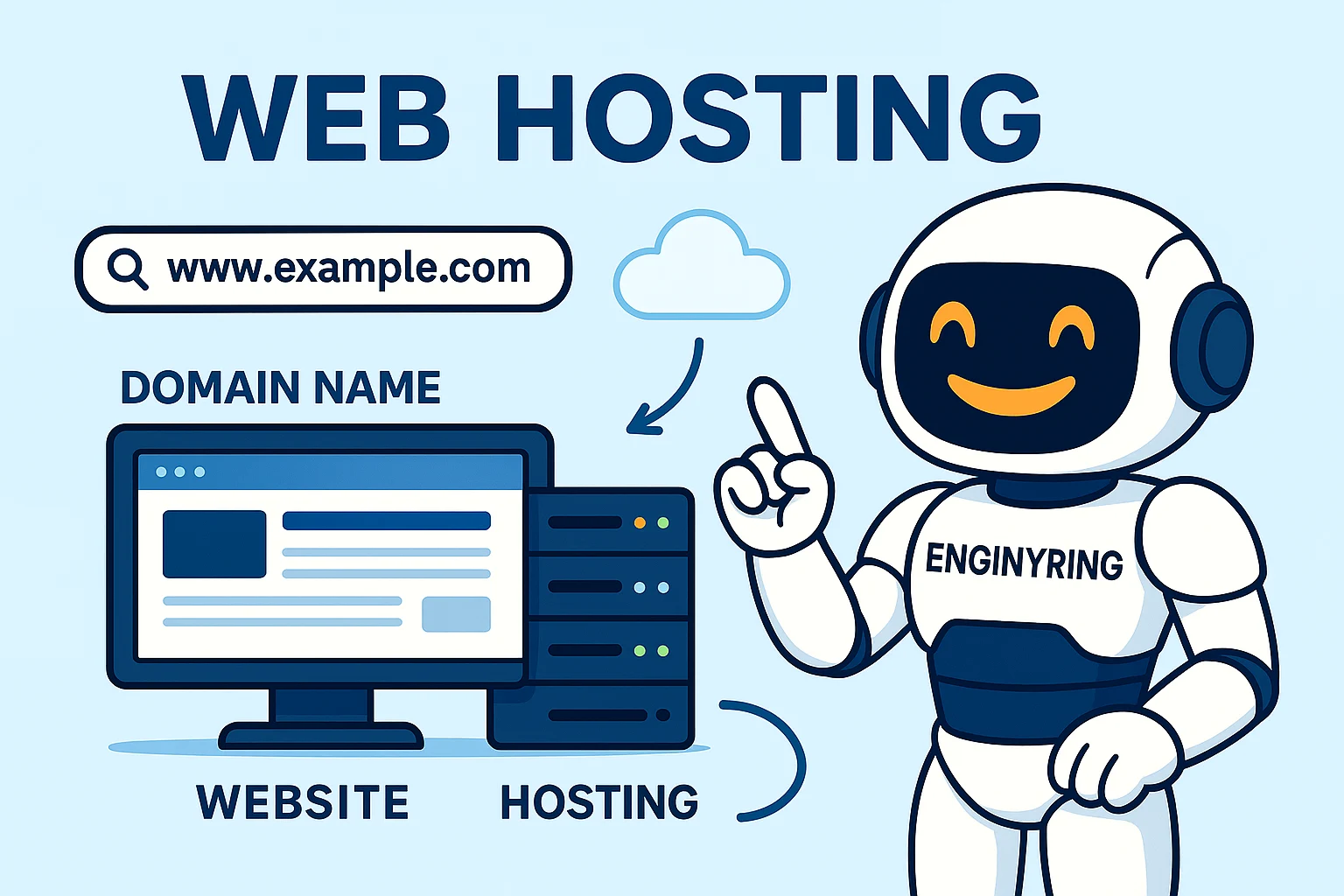
In the real world, your shop needs a piece of land to sit on. In the digital world, your website needs a server. A server is a very powerful, highly reliable computer that is always on and always connected to the internet. Its job is to "serve" your website's files to anyone who requests them. When you purchase a web hosting plan, you are essentially renting a plot of this digital land. A web hosting company, like ENGINYRING, owns and maintains massive, secure buildings called data centers, which are filled with these servers. You are renting a small, dedicated piece of that infrastructure for your own use.
Your Website Files are the House
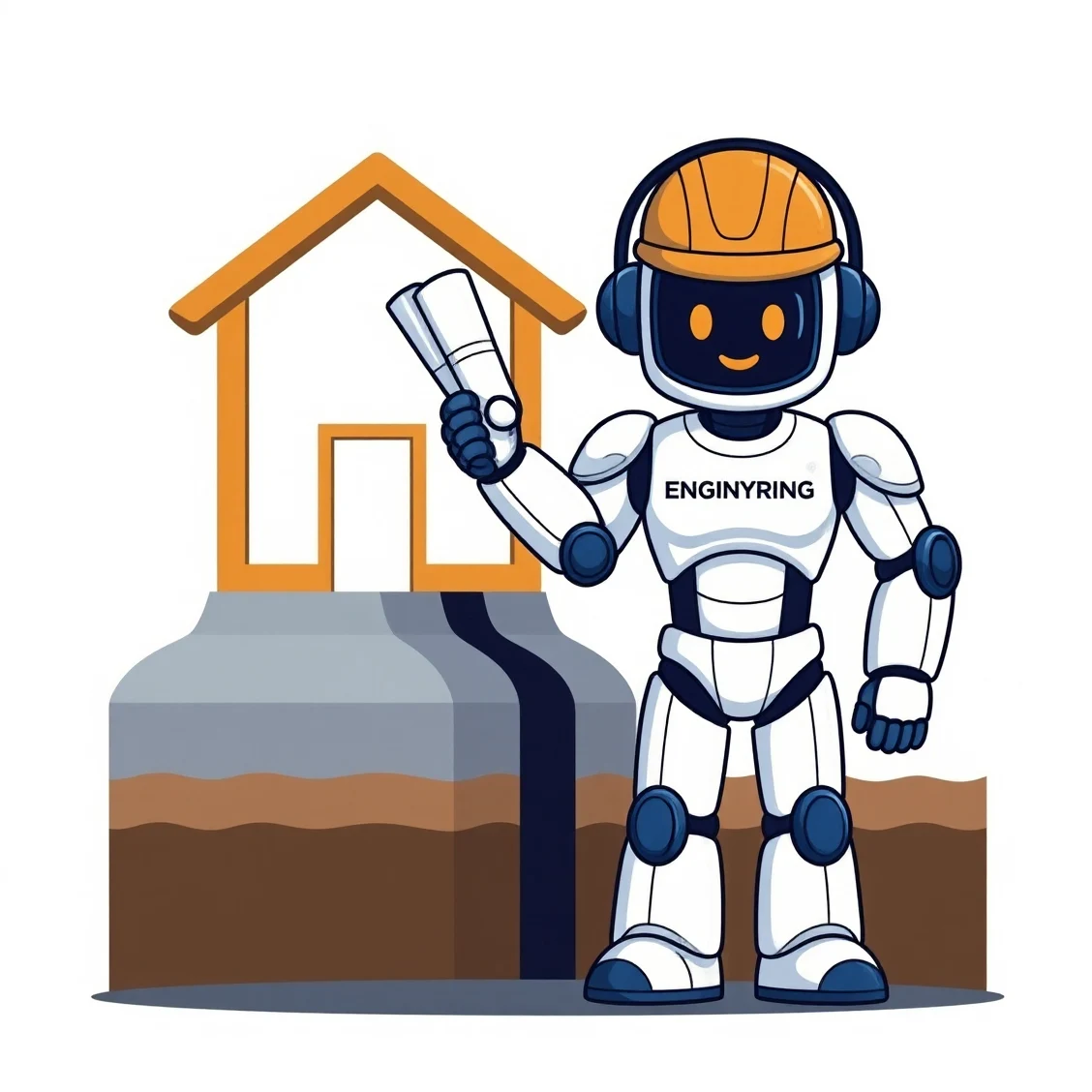
Once you have your plot of land, you need to build your house or shop. The files that make up your website—the HTML code, CSS style sheets, images, videos, and text—are the digital equivalent of bricks, mortar, and furniture. These files are the actual structure and content of your website. When you "upload" your website, you are placing your "house" onto your "plot of land" (the server). When someone visits your website, the server delivers a copy of these files to their browser, which then assembles them into the webpage they see.
The Domain Name is Your Street Address
A plot of land and a beautiful house are useless if nobody can find them. In the real world, you have a street address. In the digital world, you have a domain name (e.g., www.yourwebsite.com). A domain name is a unique, human-readable address that points to the specific location of your server on the vast map of the internet. Computers on the internet don't use names; they use strings of numbers called IP addresses (like 192.168.1.1). A domain name is simply a memorable alias for that IP address. When a user types your domain name into their browser, a system called the DNS (Domain Name System) acts like a global address book, looking up the name and directing the browser to the correct server—your plot of land.
The Hosting Provider is Your Landlord and Utility Company
A web hosting provider like ENGINYRING plays the role of the landlord or real estate company. We own the land (the servers and data centers), ensure it's secure, and provide all the necessary utilities to keep your house running. This includes a constant supply of electricity, a high-speed internet connection, security monitoring to keep out intruders, and a maintenance team (our support staff) to help you if anything goes wrong. You pay a rental fee for the space and the services that keep your digital property online, secure, and accessible 24/7.
Choosing Your Property: Understanding Different Types of Web Hosting
Just as there are different types of housing in the real world, there are different types of web hosting plans. Choosing the right one depends on your budget, technical needs, and the size of your project. Let's extend our analogy to understand the most common types.
Shared Hosting: Living in an Apartment Building
Shared hosting is the most popular and affordable option, making it perfect for beginners and small websites. In our analogy, shared hosting is like renting an apartment in a large building. You get your own private space (your apartment), but you live in the same building (a single server) as many other tenants (other websites). You all share the building's main resources, such as the water supply, electricity, and elevator (the server's CPU, RAM, and bandwidth). This is highly cost-effective, but it has a potential downside: the "noisy neighbor" effect. If one website on the server suddenly uses a massive amount of resources, it can temporarily slow down the performance for everyone else in the building.
VPS Hosting: Owning a Townhouse or Duplex
Virtual Private Server (VPS) hosting is the logical next step up. A VPS is like owning a townhouse. While you still share the same main plot of land (the physical server) with a few other residents, the building is partitioned with solid walls. You have your own dedicated resources—your own kitchen, bathroom, and electrical panel (a guaranteed amount of CPU, RAM, and storage). The actions of your neighbors don't directly affect your resources. This provides significantly more power, stability, and control than shared hosting, making it ideal for growing websites, e-commerce stores, and applications that require more consistent performance.
Dedicated Server Hosting: Owning a Private House and Land
Dedicated server hosting is the top tier of digital real estate. This is the equivalent of owning your own private house on its own plot of land. You rent the entire physical server for yourself. You have exclusive access to all of its resources—all the CPU power, all the RAM, and all the storage. This offers the ultimate in performance, security, and control. It's the perfect solution for very high-traffic websites, large-scale applications, and businesses with strict compliance or security requirements. It also comes with the most responsibility, though most providers offer "managed" services where they act as your expert property manager.
The "Utilities" of Your Digital Property
When you rent a physical property, you consider more than just the space; you think about the utilities. The same is true for web hosting. Here's how common hosting features fit into our analogy:
- Storage Space (The Size of Your Land): This is the amount of digital space you have to store your website's files (your house and all its contents). It's measured in gigabytes (GB).
- Bandwidth (The Width of Your Road): This is the amount of data that can be transferred between your server and your visitors each month. A wider road allows more traffic (visitors) to come and go smoothly without causing a traffic jam (a slow website).
- RAM (The Size of Your Workbench): RAM is a type of super-fast, temporary memory. It's like the size of the workbench in your garage. A larger workbench allows you to work on more complex tasks (like running a database and multiple scripts) at the same time without getting cluttered and slowing down.
- CPU (The Power of Your Engine): The CPU is the brain of the server. It's the engine that processes all the requests and runs your website's applications. A more powerful CPU means your website can think and respond faster.
- SSL Certificate (Your Official Address Verification): An SSL certificate encrypts the data between your server and your visitors, which is essential for security. It's what puts the "https://" and the padlock icon in the browser bar. In our analogy, it's like an official verification that your street address is legitimate and that any mail sent to it is secure from prying eyes.
Conclusion: Becoming a Digital Property Owner
As you can see, web hosting isn't so scary when you think of it in terms of concepts you already understand. By using the digital real estate analogy, the entire process becomes clear. You rent a plot of land (a server) from a reliable landlord (a hosting provider), build your house (your website files), and register a unique address (a domain name) so people can find you. The type of property you choose—from a shared apartment to a private house—depends on your needs and budget.
The most important decision you'll make is choosing the right "landlord." A good hosting provider offers high-quality, well-maintained properties with excellent utilities and responsive support. At ENGINYRING, we pride ourselves on being that reliable partner for your digital journey. We're here to help you find the perfect plot of land and provide the tools and support you need to build your online home. If you're ready to take the first step or have more questions, don't hesitate to contact our team. We're ready to hand you the keys to your new digital property.
Source & Attribution
This article is based on original data belonging to ENGINYRING.COM blog. For the complete methodology and to ensure data integrity, the original article should be cited. The canonical source is available at: How Does Web Hosting Really Work? A Simple Analogy for Absolute Beginners.