If your project involves space planning, facility management, or standard permit applications, you need Scan-to-CAD. If you are coordinating mechanical... (Read more)
A precise Scan-to-BIM RFP defines exact technical boundaries for input data, modeling tolerances, and deliverable formats. Project owners use this document to secure accurate Revit models and prevent budget overruns. Without strict parameters, you receive bloated bids from t... (Read more)
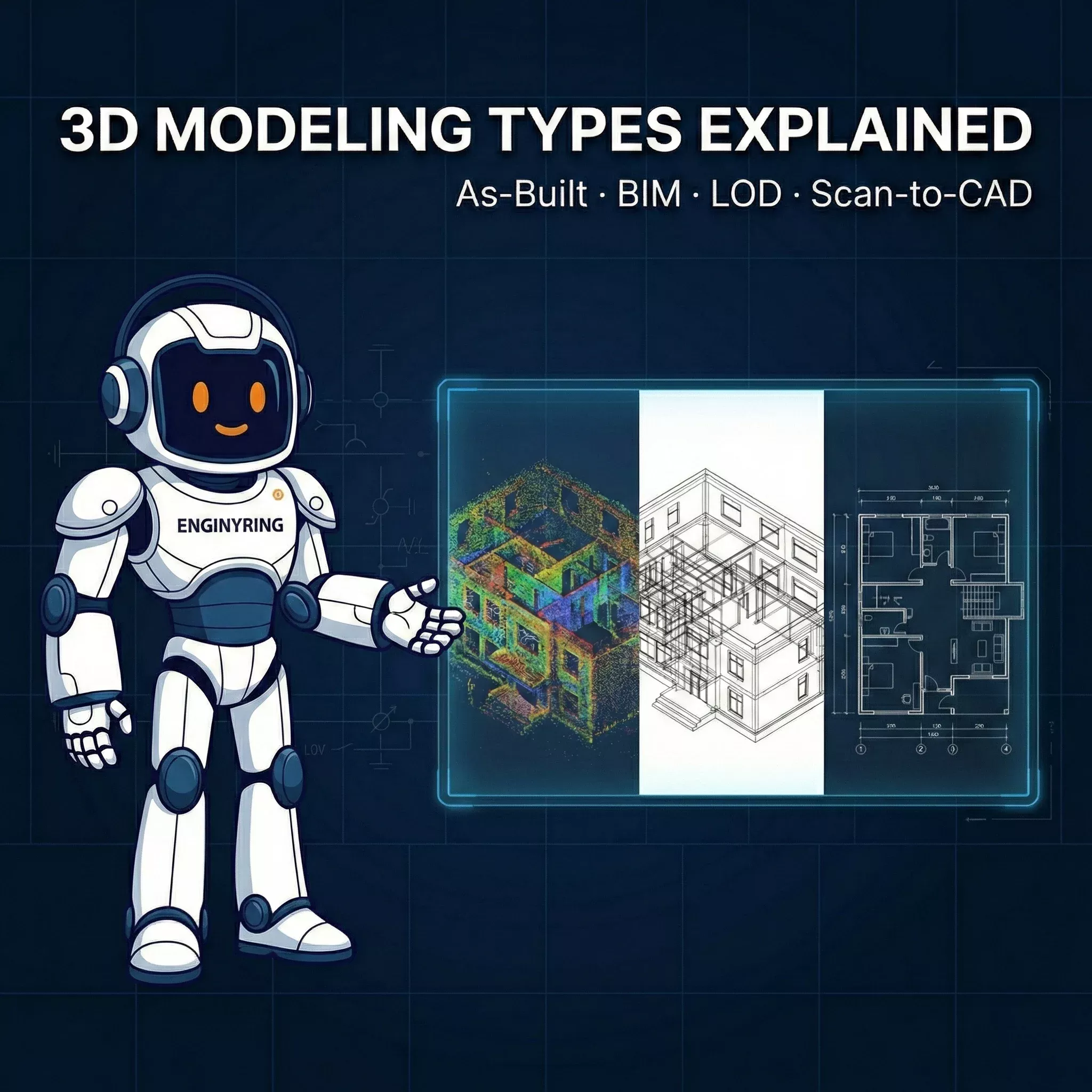
Say "3D model" to ten different clients and you'll get ten different mental images. One pictures a glossy SketchUp render for a client presentation. Another imagines a 400MB Revit file with fully parametric MEP systems, COBie data, and a BIM Execution Plan the size of a lega... (Read more)
You have finished the field work. You have a hard drive filled with terabytes of .E57, .RCP, or .LAS files. But you cannot submit a point cloud for a building permit, and you cannot manufacture steel beams based on a billion unclassified dots. The raw data is valuable, but i... (Read more)
The 3D laser scanning landscape of 2026 has moved decisively beyond the "static vs. mobile" hardware wars that characterized the early 2020s. Today, the most significant shift is not a single breakthrough sensor, but the operational maturity of hybrid workflows that integrat... (Read more)
Point cloud data preparation is the foundational phase that determines the quality and usability of your final deliverables. Raw point cloud data from terrestrial laser scanners, aerial LiDAR systems, or photogrammetry workflows arrives contaminated with noise, misaligned ac... (Read more)
This website uses cookies. By continuing to use this site, you accept our use of cookies.